


Behind the Scenes of GLOBECOM and ICC: GIMS and GITC

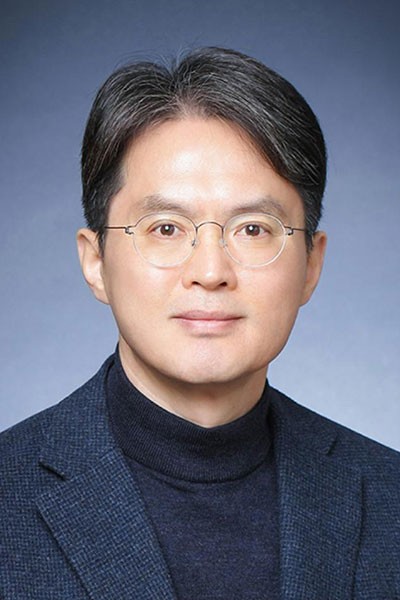

Conferences are one of the significant technical activities of the IEEE Communications Society (ComSoc) to serve its members. The two flagship conferences of ComSoc, IEEE Global Communications Conference (GLOBECOM) and IEEE International Conference on Communications (ICC), represent the most prominent in-person meetings for ComSoc members and volunteers. Considering such importance, as the benchmarks for other ComSoc-sponsored conferences, two standing committees have been established to assist volunteer teams in organizing GLOBECOMs and ICCs. The IEEE GLOBECOM/ICC Management and Strategy Committee, hereafter referred to as GIMS, and GLOBECOM/ICC Technical Content Committee, referred to as GITC, have been established as Standing Committees reporting to the ComSoc Conference Council, chaired by the Vice President Conferences. In this President’s page, I am pleased to introduce Dong In Kim, Chair of GIMS, and Kwang-Cheng Chen, Chair of GITC, to share details about the organization and operation of these two crucial committees.
Dong In Kim was a Tenured Professor with the School of Engineering Science, Simon Fraser University, Burnaby, BC, Canada, and he is currently a Distinguished Professor with the College of Information and Communication Engineering, Sungkyunkwan University, Suwon, South Korea. He is a Life Fellow of the IEEE, a Fellow of the Korean Academy of Science and Technology, and a Life Member of the National Academy of Engineering of Korea. He served as the Founding Editor-in-Chief for the IEEE Wireless Communications Letters from 2012 to 2015. He was selected as the recipient of the 2019 IEEE ComSoc Joseph LoCicero Award for Exemplary Service to Publications. He was the General Chair of the IEEE ICC 2022, Seoul.
Kwang-Cheng Chen is a professor of electrical engineering at the University of South Florida, United States, after serving as the distinguished professor and Irving T. Ho Chair at the National Taiwan University, Taiwan. He founded and chaired the Technical Committee on Social Networks in the ComSoc, and served as TPC Co-Chair, GLOBECOM 2002, Executive Chair, GLOBECOM 2020, and General Co-Chair, GLOBECOM 2025. He is an IEEE Fellow and has received several paper awards for his IEEE journal and conference papers.
GIMS
The GIMS Committee is responsible for the successful conduct, strategic evolution, and policies of GLOBECOM and ICC, providing strategic guidance, operational preparation, and management oversight, including the following activities regarding each conference:
- Selecting the location, venue, and dates by evaluating bids to host the conference.
- Initiating and approving a Memorandum of Understanding (MoU) with the Organizing Committee, addressing basic guidelines and directives for successfully managing the conference.
- Appointing or approving the appointment of a General Chair, Executive Chair/Vice Chair, Finance Chair, etc.
- Approving locations and venues, i.e., hotel, convention center, etc.
- Providing general consultation and appropriate guidance to the Organizing Committee by appointing one member to serve as GIMS Advisor.
- Approving financial plans, providing advice on the preparation of budgets, and guidance concerning all patronage-related activities.
- Approving and aiding in selecting conference themes as the Decision Matrix deliverables by the Organizing Committee.
- The Committee reports to the Conference Council. Committee membership and term limits are specified in the Bylaws for Standing Committees. This committee’s membership shall include diversity in geographic and professional experience whenever possible. A special effort should be made to have sitting members with professional affiliations in the industry.
- Voting members of GIMS — All voting members of GIMS must be IEEE ComSoc members. The voting membership shall be eight in total.
- The GIMS Chair
- Three members at large (MALs)
- Three past members of the ICC or GLOBECOM Organizing Committee (OC)
- The GITC (GLOBECOM/ICC Technical Content Committee) Chair
- Non-Voting Members of GIMS
- The VP-CON
- The ComSoc Staff Project Manager
- The ComSoc Staff Finance Manager
The current (2025) composition of GIMS is in Table 1.
Voting Member | ||
| GIMS Chair | Dong In Kim (Sungkyunkwan University, South Korea) | |
| Member-at-Large (MAL) | Vice Chair, Site Selection Chair | Rose Qingyang Hu (Virginia Tech, USA) |
| Member-at-Large (MAL) | Decision Matrix Chair | Halim Yanikomeroglu (Carleton University, Canada) |
| Member-at-Large (MAL) | Finance Chair | Hikmet Sari (NJUPT, CN) |
| Past Members of ICC or GLOBECOM Organizing Committee (OC) | Patronage Chair | Abbas Jamalipour (University of Sydney, Australia) |
| Past Members of ICC or GLOBECOM Organizing Committee (OC) | Operations Chair | Lisandro Zambenedetti Granville (Federal University of Rio Grande do Sul (UFRGS), Brazil) |
| Past Members of ICC or GLOBECOM Organizing Committee (OC) | Industry Forums and Exhibitions Chair | Nordin Ramli (MIMOS) |
| Past Members of ICC or GLOBECOM Organizing Committee (OC) | GITC Chair | Kwang-Cheng (KC) Chen (University of South Florida, USA) |
Non-Voting Member | ||
| Vice-President Conferences | Chengshan Xiao (Lehigh University, USA) | |
| Conferences Director | Kristine Chin | |
| Finance & Business Operations Director | Bruce Worthman | |
| Senior Conference Planner (ICC) | Melissa Torres/Tina Gaerlan | |
| Event Program Manager (GLOBECOM) | Jimmy Le | |
Site Selection is one of the key roles of the GIMS Committee, which is done with five basic principles in mind:
- Support and expand ComSoc’s membership;
- Promote high quality technical interactions;
- Enhance collaboration and support from industrial partners;
- Provide maximum financial support for ComSoc’s activities while minimizing risk;
- Be inclusive of all ComSoc members. The selection of invitational bids to host a conference should take place 48 months before the conference date to minimize conflicts with other meetings and activities that might adversely affect the success of the planned conference.
The GIMS site Selection Chair coordinates with the proposal teams and the GIMS voting members to conduct the selection. Prior to approval, an MOU must be executed between the Conference Organizing Committee and the responsible local IEEE officials or the hosting Section/Chapter stating that the policies, procedures, and directives established by the IEEE, the IEEE ComSoc, and the GIMS will be followed.
Over the years, conference locations should be distributed geographically to most effectively serve the membership of ComSoc, the communications industry, and the communications profession. From 2003 to 2016, GLOBECOMs have been held in the US, and ICCs were held outside the US. In January of 2014, GIMS adopted a new 3-year 3-region rotation plan for both conferences (the transition started with GLOBECOM 2016). The three regions are the Americas (Canada, USA, Central and South America), Asia Pacific, and EMEA (Europe, Middle East, and Africa). The ICC shall be held annually in the spring, preferably in June. GLOBECOM shall be held in the fall, preferably in early December.
GIMS provides general consultation and appropriate guidance to each conference’s Organizing Committee (OC). GIMS shall appoint from its membership (past or present) at least one member to serve as GIMS Advisor for each conference OC to assess such issues as the Decision Matrix deliverables and financial reports. Appointing or approving the appointment of the management team for each conference is another primary responsibility of GIMS. Recommendations will typically come from an IEEE Section, a local ComSoc Chapter, or ComSoc volunteers in the area hosting the conference. GIMS approves and reviews the financial plans and provides advice on the preparation of budgets, oversees the disposition of all liabilities and assets of a conference, and follows applicable IEEE financial policies and guidelines. GIMS ensures that a representative for each future conference shall attend all GIMS meetings to report on the status of their conference. These representatives shall also be expected to participate in the Wrap-Up meeting of the conference in progress.
One of the essential aspects of the success of GLOBECOM and ICC has been the addition of new co-located events. Co-located events are intended to attract a wider audience for the conferences. These events may promote a new technical topic, a new professional interest, or create synergy. While the process of conference evolution is vital to continued success, it is also essential that any new elements fit into the objectives and methods of the conferences. To accomplish this, proposals for co-located events must be received, reviewed, and approved in a timely manner. The review and approval of proposals are GIMS and GITC’s responsibilities due to the potential impact on a conference’s technical, logistical, and coordination aspects. Three general classes of co-located events have been defined, namely industry program, special workshop, and interest group meetings such as Young Professionals (YP), Women in Communication Engineering (WICE), and 4 Minute Thesis (4 MT) competition.
GITC
The role of GITC is to provide the strategic vision and manage all technical content of the two flagship conferences of ComSoc. GITC works with the sister Standing Committee, GIMS, to ensure a satisfactory experience for attendees in these two ComSoc’s flagship conferences. In particular, GITC focuses on policies to develop compelling technical programs and oversees the effective organization of technical programs in GLOBECOMs and ICCs. GITC keeps watching the review process and paper selection criterion, formation of technical sessions, workshops, tutorials, and selecting the best paper awards, to update the guidelines of GLOBECOM/ICC technical program toward excellence and fairness while observing or foreseeing any need.
GITC is composed of 7 voting members: a chair, three members appointed from technical program chairs or co-chairs of past GLOBECOMs and ICCs, two members-at-large (MAL), and the GIMS chair, who ensures the smooth collaboration between GITC and GIMS. Current GITC voting members, roles, terms, and affiliations are listed in the following table. At the same time, the VP Conferences, Chengshan Xiao, and Director of Technical Committees, Shiwen Mao, are non-voting members. GITC is organized by considering professional experience and geographic representation.
| Kwang-Cheng (KC) Chen | Chair | 2024–2025 | University of South Florida (USA) |
| Christos Verikousos | Vice Chair | 2025–2025 | ISI/ATHENA and University of Patras (Greece) |
| Meixia Tao | Ex TP Chair | 2024–2026 | Shanghai Jiao Tong University (China) |
| Ekram Hossain | Ex TP Chair | 2025–2027 | University of Manitoba (Canada) |
| Yacine Ghamri- Doudane | MAL | 2025–2026 | La Rochelle University (France) |
| Baek-Young Choi | MAL | 2024–2025 | University of Missouri - Kansas City (USA) |
| Dong In Kim | GIMS Chair | 2024–2025 | Sungkyunkwan University (South Korea) |
To effectively organize the technical program for each GLOBECOM or ICC, GITC oversees the technical program organization from three and a half years before the conference (GLOBECOM or ICC) to six months after. A GITC advisor from the GITC members is assigned to assist with the conference. The major functional roles of the technical program leadership for a GLOBECOM/ICC include TPC Chair or Co-Chairs, Workshop Program Co-Chairs, Tutorial Program Co-Chairs, Travel Grants Co-Chairs, Publications Co-Chairs, Awards Chair, and Symposium/Track Co-Chairs.
The operation of GITC follows the GITC Handbook, which specifies the significant milestones of tasks to form the technical program team and related functionalities, particularly (not exhaustive).
- Senior Technical Leadership Team (i.e., Technical Program Committee Chair/Vice Chairs, or Technical Program Committee Co-Chairs)
- IF&E Leadership Team (with GIMS)
- Conference Theme and Call-for-Papers (with GIMS)
- Technical Program Leadership Team
- Symposium Co-Chairs, including Track Chairs in the Selected Areas in Communications (SAC) Symposium
The technical success of any society conference relies on volunteers’ dedication and high-quality services, while GITC assists in successfully forming the technical leadership team and providing top-quality services. While forming the technical leadership team, GITC pays extra attention to professional and geographic representation (for the senior technical leadership team) and brings new blood into the ComSoc flagship conference organization. One of the significant efforts for GITC is to carefully and constructively approve the nomination and selection of symposium co-chairs and track chairs that the senior technical leadership team has proposed, since this process heavily influences the satisfaction of authors and participants. A database for different aspects of past volunteers and program statistics has been established for GITC’s comprehension of statistical data to ensure the effectiveness and fairness of the technical program through analysis of historical data, such that future improvements of the technical program organization can be made.
Consequently, another major task for GITC is to update existing policies and initiate new policies to guide the formation of future technical programs of GLOBECOMs and ICCs. This task aims to form a compelling technical program for attendees of flagship conferences through effective participation and the remarkable services of ComSoc volunteers with state-of-the-art technology.
In addition to regularly overseeing the formation of the technical program of each conference over 4 years, GITC has always been considering ways to improve the GLOBECOM/ICC technical programs. GITC will listen to observations and suggestions from ComSoc volunteers and conference participants regarding the organization and presentation of technical programs. Then, after recognizing the urgency and importance of such voices, GITC will conduct internal discussions, while taking different opinions into account, toward final recommendations by consensus. Of course, all decisions on improvements require approval from the ComSoc Conference Council. In the past years, significant discussions included the number of symposia and the number of tracks in the SAC symposium for each GLOBECOM/ICC, updated practice for best paper awards, attractive technical activities to a broad audience, particularly new/young attendees, and ways to attract more audience to the technical sessions.
GIMS and GITC are grateful for any input members may have on holistically improving ComSoc’s flagship conferences.